Category: Visits

Capturing birds in flight

Estimated Reading Time: 4 minutes

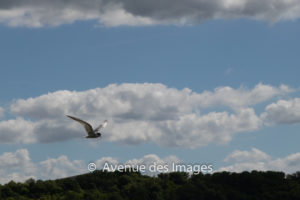
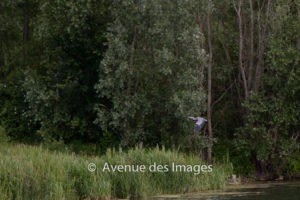
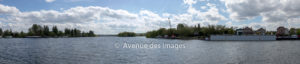
My afternoon introduction to capturing birds in flight tool place at the Étang de la Galiotte. This translates to Galiotte Pond. When you visit you will see that is an understated way of describing a large mass of water in Carrières-sous-Poissy. Capturing birds in flight professionally requires specialized equipment. I need to verify that I am interested enough to make that investment. So with my existing equipment I see about capturing birds in flight.

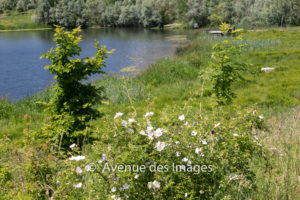
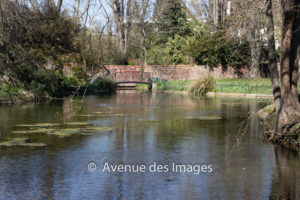
You can see from the map the lake is quite large. The town of Carrières-sous-Poissy, which translates to Quarries under Poissy, gives a good clue to the origin of the Étang de la Galiotte. The Paris region is made up of layers of sand, limestone, mixed with various amounts of clay. Being by the river Seine transport of the quarried sand was easy. Subsequently the Étang de la Galiotte was filled with river water to make a lake.

The lake is a major feature of the new park du peuple de l’herbe which covers 113 hectares.
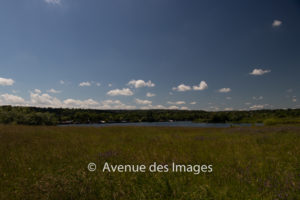
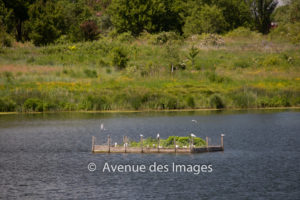
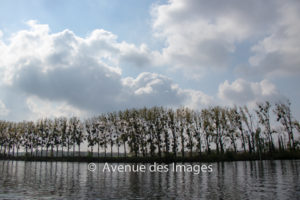
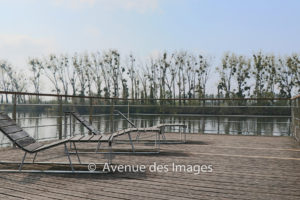
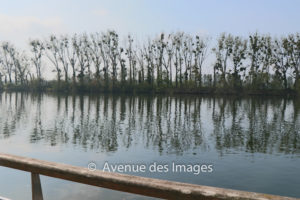
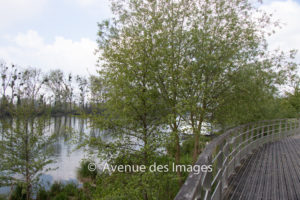
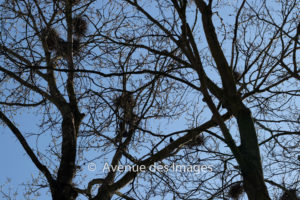
Today, the lake and surrounding park are the host of birds, fish and people. There is a small island in the centre to help birds nest and breed. Making it a good site for capturing birds in flight. This protected natural space hosts a village of about 30 floating homes on the southern shore of the lake. There is an active residents association.

The Yvelines region published a detailed study, in French, about steps taken to avoid the risks associated to natural disasters in the region linked to the river, the geology and other potential threats.
Now to my visit. What did I see and how did the afternoon go?

Getting There

First of all if you arrive from Paris take to the train or RER to Poissy. You can walk from the train station at Poissy. It’s a fairly level walk over the main road bridge. It will take 20 minutes, about 1.5km. If you arrive by car, then I suggest you park in the Parking du parc du peuple de l’herbe. There are several bus services which use the road bridge to get to the Poissy station. The town of Poissy has also a project to build a new footbridge (site in French) linking the station to the park.

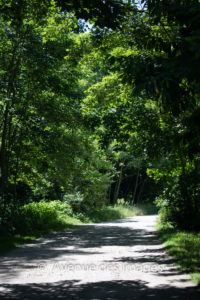
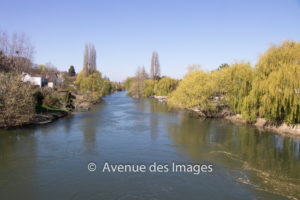
For the less nimble on their feet, I would recommend sticking to the path that run along the river Seine, rather than those by the lake which end up as a narrow track in the woods.

Bright sunshine and water

Bright sunshine can make photography complicated. On the good side everything is brightly lit, but with that comes shadows. And the contrast can be hard to manage. Add to that water, and to a slightly lesser degree the bright blue sky, and you have bright reflections and dispersed light from the sky and water. This can make the blue sky appear grey, the beautiful water dull and opaque.

Polarization

The solution to this is a polarizing filter. You may will be familiar with polarizing sun glasses. The same filter on your objective will filter out light which is dispersed in all directions. It will leave nicely aligned light rays. The advantage that the filter has over sunglasses is that you can spin the filter to choose exactly which direction the light rays should be. This allows you to choose the blue colour for your sky and optimize the view of the water so you can see the fish etc. Unfortunately my filter was not with me on this trip.

Freezing motion

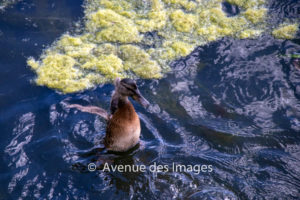
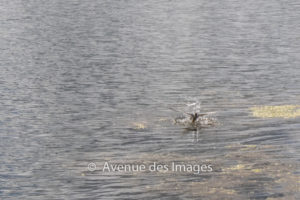
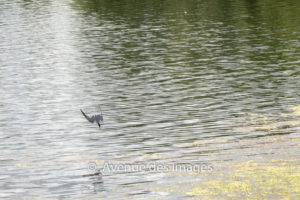
So I chose to focus on the bird-life. In June the young ducks and geese still look cute and fluffy. They become a natural subject for cute photos. There are also plenty of terns here. They fly quickly over the water’s surface before diving into the water to capture fish. And the fish don’t have much chance as they are so fast. This speed also makes them difficult to photograph.
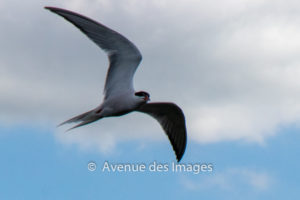
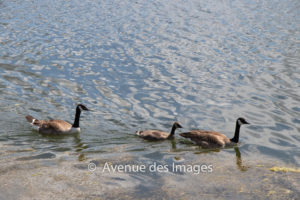
Some starting steps

Time needed: 30 minutes

Capturing flying birds

  1. Before you go

    Empty the memory card, and take the fastest card you have. It might be worth checking what file types you are storing. In general I write RAW and JPEG files to the card. Doing this means writing takes longer and uses more space. You could just save high quality JPEG for this session.

  2. Select objective

    Use a zoom, I would say at least 135mm, preferably 210mm, or more

  3. Use auto-focus

    Set the auto focus to AI servo. You will not be able to focus manually on the fast moving birds, use the camera’s intelligence o track them in flight

  4. Choose the ISO setting

    Consider setting the ISO to 100, or 200, depending on the aperture of your objective. The smaller the aperture the less light will be collected and therefore a higher ISO can help.

  5. Set speed

    In order to freeze the movement of a bird, or anything moving rapidly, set the speed to a maximum of 1/800s

  6. Review and modify

    After your first series of photos review and adjust the settings. Too dark check the ISO and aperture. Blurred reduce the speed.

  7. Repeat

    There will be many missed shots so just keep going

SD Card speeds

There are many sizes of SD cards, but I would suggest 32GB or 64GB. Which gives plenty of room and not a totally unmanageable volumes of photos to sort through when you get home. When the technology was launched it supported a 12.5 MB/s speed. At this speed it would take 2 seconds to write a typical RAW image. Making continuous shooting for a bird in flight impossible. The technology now supports up to 3940MB/s however not all cameras support such speeds, nor do they need them. There are 3 common ways of describing the speed that the card can transfer data.

Look for card with the U3 class. These can support up to 30 MB/s which id ample for video and photo recording. There is more information on the classes on the SD card Association website.

Good luck capturing birds in flight. If you further inspiration try this external website.

Return visit

It’s a great park and I went back in the winter. You can read about it here.

I have other posts about my visits along the River Seine, for example Spring walk along the Seine

Purchase my art

Some of my photos are available for purchase on my Adobe Stock store the link in the menu.

Or by clicking on the widget below.
Catch them while you can

Estimated Reading Time: 2 minutes

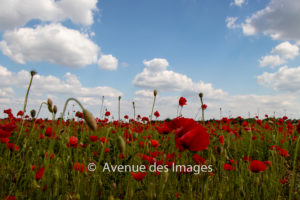
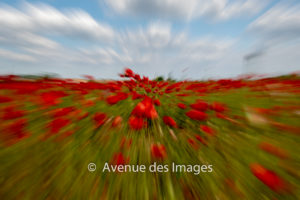
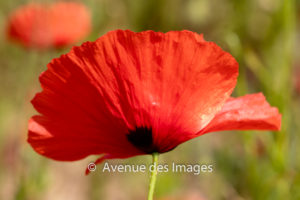
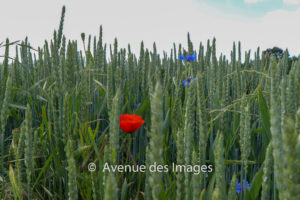
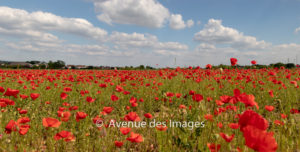
Poppies flower for a short time, you need to catch them while you can. They are short-lived perennial plants and have brightly coloured flowers. The petals appear crumpled and very fine. Spreading out as they straighten. There are many species and many colours. The one I see most, is the 4 petaled red poppy. It grows in and around farmer’s fields of wheat, corn and barley. I expect it’s the Papaver rhoeas, or common poppy I see most. I think it’s this one because of the name and its description. It has 4 red petals. The other famous poppy is the Papaver somniferum, commonly known as the opium poppy. This one I never see. The common poppy will flower from late spring to early summer but each flower doesn’t last long so catch them while you can.

It’s hard to imagine how soldiers in the battlefields of the first world war would look upon such a field of poppies. But the poppy fields of Belgium became a symbol of the conflict and feature in a poem from the front line – In Flanders Fields by John McCrae.

Remembrance

The poppy maintains that link today as the symbol of remembrance for the Commonwealth Remembrance Day. This is held annually on November 11th. It marks the end of First World War hostilities. In the UK the date is an important fund raising event for veterans and organised by the The Royal British Legion. The poppy is not the only flower associated with the end of World War 1. In France it is the cornflower, which is often found growing next to poppies.

Follow this link if you want to see more of my photographs of Flowers and Plants. There is also another blog post showing 3 stages in the life of a poppy flower.

Some of my photos are available for purchase on my Adobe Stock store or directly below. There are other landscape photos here.
.


Walk along the Seine from the river Oise

Estimated Reading Time: 2 minutes

Last week I walked along the river Seine towards Paris, starting in Conflans-Sainte-Honorine. Walking the in the other direction, towards the sea, Conflans is home to the confluence of the rivers Seine and Oise. So today I decided to walk along the Seine from the river Oise. There are few parking spaces at the confluence of the two rivers.

Both rivers have a path so you have to choose, today I decided to take a short walk along the Seine. The river Seine is a major transportation route and large barges are almost always moored in Conflans. Important road and rail links are also a feature of the town. Alongside the river, the landscape and nature I wanted to capture the transportation links.

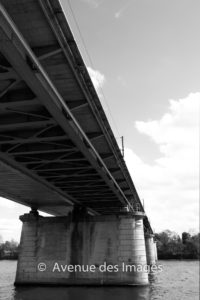
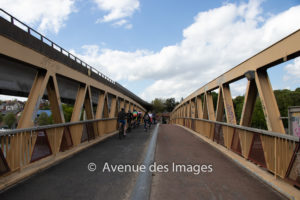
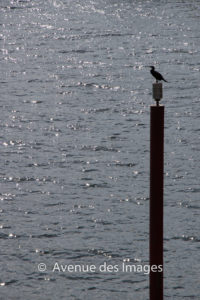
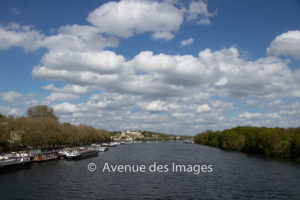
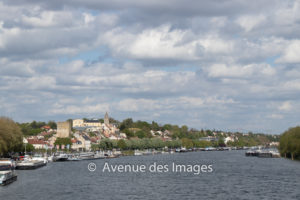
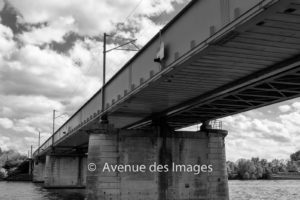
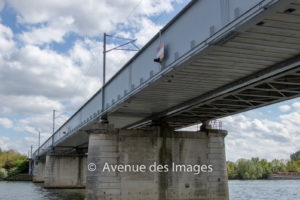
The cycle bridge is part of the itinerary from Paris to London. The segment from Maisons-Laffitte to Chaussy, some 48.71km. The rail bridge is part of the RER A line running from Cergy le Haut to Paris and in Conflans fin d’Oise the station also serves the railway line from Paris St Lazare to Mantes la Jolie. From the footbridge you have a lovely view towards the historic town centre of Conflans Sinte-Honorine. You can also witness local birds looking for a meal.

HDR photos to bring out hidden features

I wanted to compare a colour photo of the underside of the rail bridge with a black and white version. Industrial sites lend themselves well to black and white images. I also wanted to capture the clouds and the metal structure. This called for a high dynamic range. Something that many cameras offer today. It builds a single image out of several, often 3, images of the same object. Each image is taken with different exposure settings to capture different lighting and details.

I also took a walk this spring around Villennes sur Seine, which is just a short distance away, on the way to the sea!

Going the other way towards Paris, I have a post about Urban Photography at La Défense.

Some of my photos are available for purchase on my Adobe Stock store, via the link in the menu or directly below.


Spring walk along the Seine

Estimated Reading Time: 2 minutes

Spring is having a slow start this year. So when I took a spring walk along the Seine at the Quai de Gaillon, in Conflans-Sainte-Honorine there was still a wintery look to the scenery. The trees were budding and the mistletoe was still clearly visible.

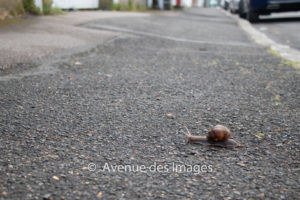
I was surprised to see a snail cross my path.

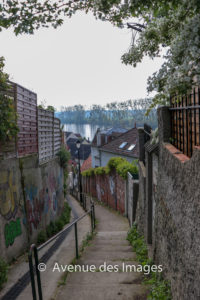
The walk down to the river seine banks is relatively steep. There are several routes down from the town to the riverside. This is the rue de la Fossé du Moulin. It is for the most part inaccessible to vehicles.

But the peace and quiet of an early morning walk along the banks of the river Seine is worth it. It was a great source of inspiration for the impressionists. Camille Pissarro did some painting there in the 1870s for example this one. This was probably painted in the summer nearby, rather than during a Spring walk along the Seine at Quai de Gaillon.

Here you can see mistletoe clearly in the tress on the far side of the river Seine.

There are also many areas to stop, relax, exercise. There is no doubt in my mind, in the summer it will be busier. Get there early if you want to avoid the weekend crowds.

Next week I will explore some other area of the town. The confluence of the river Oise and River Seine.

I also took a walk this spring around Villennes sur Seine, which is just a short distance away, on the way to the sea!

I have other posts about my visits along the River Seine, for example Capturing birds in flight, or going the other way towards Paris, I have a post about Urban Photography at La Défense.

Some of my photos are available for purchase on my Adobe Stock store, via the link in the menu or directly below.


A spring afternoon walk around Villennes

Estimated Reading Time: < 1 minute

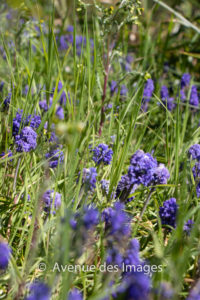
A cool spring afternoon was the ideal opportunity to take a walk in the park. Walk around the park and capture the quiet atmosphere at the start of lockdown. New year’s growth is just appearing. As a result; it is not swamped by the profuse summer leaves and flowers.

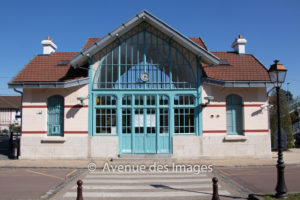
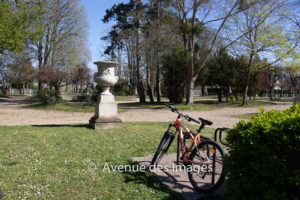
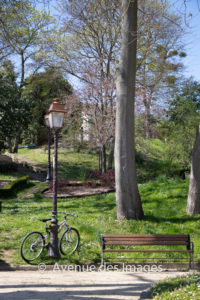
The small Paris suburb of Villennes-sur-Seine, in Yvelines, France has some wonderful architecture and parks. So I stayed in the centre of town and visit the Parc du Docteur Fauvel, the town hall and its garden and the river Seine. The river runs very close to town here. This spring afternoon walk around Villennes was in April.

These were taken on my Canon camera with either my 50mm or 18-135mm lens. I would recommend a Spring afternoon walk around Villennes as it shows you don’t have to be far from the city of Paris to be in lovely countryside. It’s a short train ride from St Lazare station. When you get off the train I suggest you start by appreciating the architecture of the old station building. However, If you come by car, parking in the town centre is limited and short stay. The town is not far from the A13 and A14 autoroutes.

My next walk will be a little upstream on the river Seine at Conflans-Sainte-Honorine

Follow this link if you want to see more of my photographs of Flowers and Plants

Some of my photos are available for purchase on my Adobe Stock store, via the link in the menu or directly below.